Hand-raised rabbits in Tucson.
Handled gently every day from their first week, and not only by me. The point is that being picked up is nothing new by the time it's you.

Available now
Litters are small. The price you see is the whole price, and it covers daily handling from their first week to the day they leave.
Availability Ages are counted from each birth date, so they're right today. How that works
Want to see the next litter first?
When a litter is born I send one email with photos of them, a few days before they go up on the site. That is the only thing I use your address for, and you can tell me to stop whenever you want. How I keep your details.
The litter born 27 September opens for reservation from .
You're on the list. The next email you get from me will be photos of the new litter.
Settled in
Where they ended up
In their own words, with their permission. No ratings, no stars.
About
Comfort with people is built in the first weeks, long before you meet them.
I'm William, and I came to rabbits through chinchillas. A chinchilla doesn't want to be held. Keeping them taught me what I was after: an animal that comes to you.

These litters are Holland Lop crosses. Purebreds go on sale late October or early November, once I've seen which ones I'm keeping as they grow. A farmer sold me a Satin Angora, and a Holland Lop followed. The purebred lines are starting: the Netherland Dwarfs are here, the first purebred Holland Lops were born 18 September 2026, and another Angora comes after, kept separate.
Some rabbits never go up for sale. Each line is bred to get better, and the ones that carry it forward stay. Every litter goes on the litters page from its first day, back to 28 June 2026.
A few at a time, on purpose. Selective breeding, then time on each animal, handled every day by me and by other people.
Rabbits are prey animals, and hands have to be learned. Kits handled briefly at feeding time in their first week come up to people at weaning, and still do as adults. Kits nobody handled avoid the hand and grow up afraid of people.
Those weeks are long before you could meet them, so they're mine. I keep it going every day after, with other people. A rabbit calm only with its breeder isn't socialized.
The routine is what you're paying for. It makes a rabbit that comes to people instead of running from them. It won't make one love being lifted: most never do, and each one is still its own animal.
The routine here
What happens before you meet them
The whole routine, week by week. Every listing shows which week its rabbit is in. Ask me about any part of it.
Fourth litter was born .
First handling
Short, gentle sessions within days of birth, nest kept warm and mostly undisturbed.
Carrying becomes normal
Lifting with a hand under the back and bottom every time, and long stretches at floor level, which is where a rabbit is most at ease. Leaving the ground is the fear most pet rabbits never lose.
New people, new noise
Visitors, children, the noise of a house, and the carrier with the door open so it stops being a trap. Ordinary life at their own pace, with somewhere to retreat to whenever they want it.
When they're ready
Eight weeks is what I aim for. A kit goes home once it's off milk and eating hay and pellets on its own, and has been eating and drinking well for at least a week. I weigh it, and it has to be holding or gaining, with nothing wrong with it. One that isn't there yet waits, whatever its age.
Watch them grow up
Don't take my word for any of the above. Photos and video, including the unglamorous parts.
Bought one here? I'll help it get seen.
- Start its account the day it comes home.Its whole life on camera, from the first day.
- Send me your clips.I'll help you make them, and tell you what would make the next one better.
- The good ones go on my story when there's room.My top reel reached half a million views.
Included
What you take home
The first two weeks at home are the risky stretch, so nobody should be guessing through them.
- Two weeks of their current foodChanging their food suddenly upsets their stomach. Mix the new in slowly.
- A written care sheetDiet, litter habits, and the specific signs that mean call a vet today.
- My health check, done with youEars, teeth, eyes, weight and coat, gone over together at pickup.
- Tucson exotic vet recommendationsNot every clinic here treats rabbits. The one I use, and why.
- Help getting it seenIts own account from the day it comes home, my help with the clips, and the good ones on my story. How that works.
- My phone number, keptNo question limit and no expiry. This is the part I care most about.

Also offered
Boarding, whenever you travel
Most kennels aren't set up for rabbits, and one left with a stranger spends the whole week stressed. Yours comes back to the food it knows and the same hands that raised it.
- Hay, pellets, clean bedding and the daily handling they grew up with
- Photos while you're gone, so you're not left wondering
- Charged by the day, so you only pay for the days you're actually away
Arizona's wild rabbits carry a virus called RHDV2, and it is usually fatal. Keeping the property closed to outside rabbits is how I keep everyone here safe, yours included.
FAQ
Things people ask
If yours isn't here, text me. There's no dumb rabbit question.
How does this work?
Send me a text or a note. Tell me a little about your home and who the rabbit is for. I'll tell you which one fits, and I'll say so if the answer is to wait for the next litter.
Then come and meet them. The visit is free and there's no booking fee. Nothing has to be decided on the day.
$50 holds the one you choose. It comes off the price, and you get a receipt from me. Rabbits open for reservation at four weeks old.
Pickup is when the rabbit is ready. Eight weeks is what I aim for. We go through the care sheet together and you leave with everything on the list above.
Why do they cost what they cost?
The price on the photo is the price you pay. No fee to visit, no booking fee, nothing added at pickup.
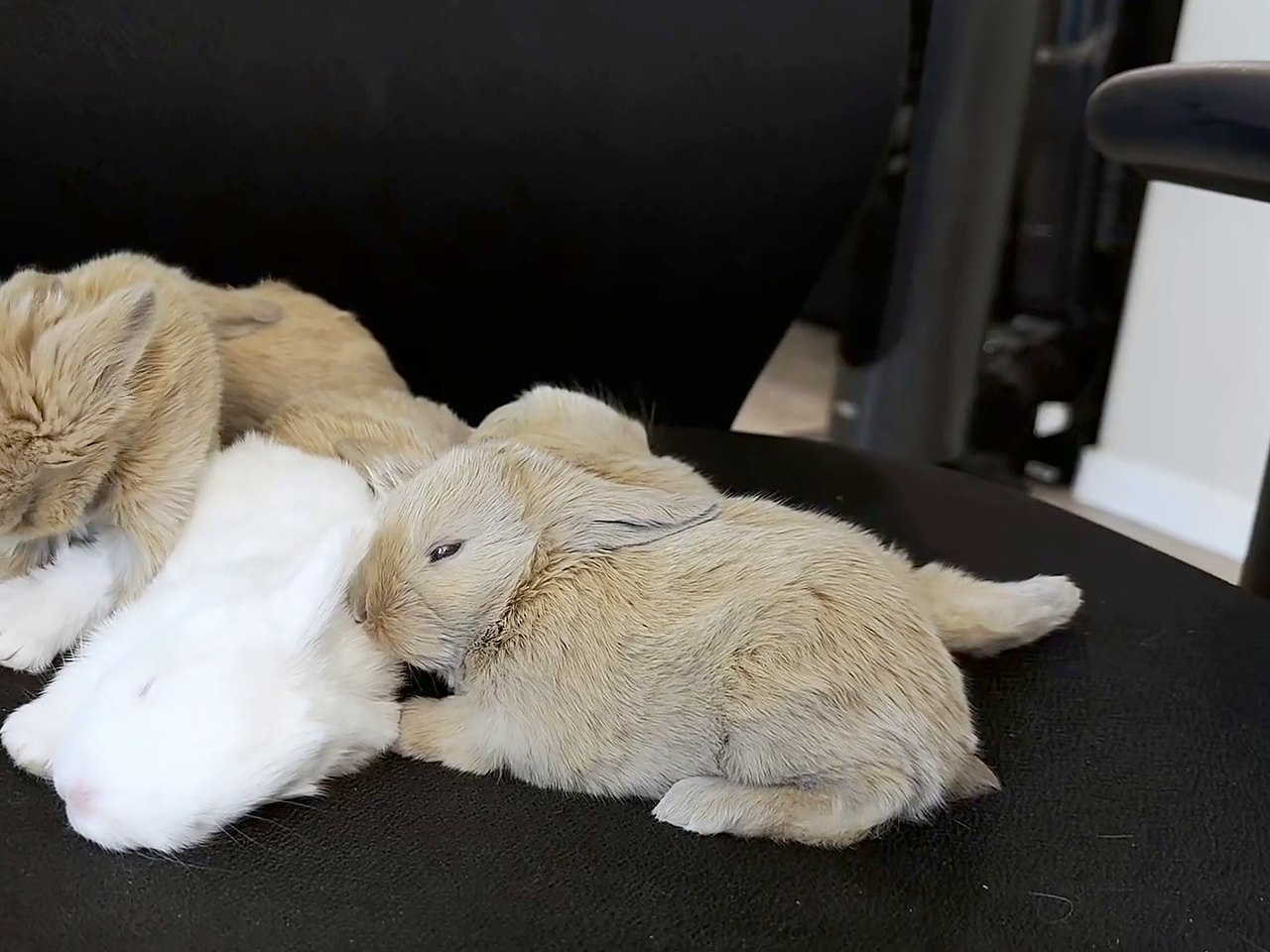
Each rabbit has its own price. Right now Marshmallow, a white kit, is $375, and Honey, Biscuit, Toffee and Pecan, all fawn kits, are $350, and Butterscotch, a fawn doe, is $300.
What the difference buys. A rabbit in Tucson can be had for under a hundred. Here's what comes with these:
- Handled every day from its first week. Handled early, a rabbit comes to people instead of running from them.
- A record you can check. Its birth date, its litter from day one, its parents and dated photos, all on this site.
- A health check you watch. Ears, teeth, eyes, weight and coat, together at pickup, and it goes home when it passes the test.
- Two weeks of its food and a care sheet. The Tucson vets who treat rabbits, and my number for as long as you have it.
- Help getting it seen on Instagram. My top reel reached half a million views. How it works.
- If it isn't working out, you call me. I'd rather help it find the right home than have it stay where it isn't wanted.
The rabbit is the smallest part of what it costs. A year of keeping one comes to $1,672 to $3,354 on Chewy's vet-reviewed figures, and with good care they live 8 to 12 years.
10% off if you serve. Military, police, firefighters and other first responders. Say so when you get in touch.
You can pay in parts. $50 holds it, and the rest can come in any amounts before pickup. How paying works.
Ask any seller the same questions. The eight I'd ask are in the next answer.
What should I ask any breeder before I pay?
Eight questions, and where this site answers each one. Take them to any seller.
When was it born, and how old is it today? Both are on every listing here, and the age is counted today.
Can I see its litter and its parents? Its litter from its first day, and the mother and father on every listing.
Who handles it, and since when? Me and other people, every day, from its first week.
When can it go home, and what decides that? Eight weeks is what I aim for, and a test every kit passes first.
What's the health check, and can I watch? Ears, teeth, eyes, weight and coat, done with you at pickup.
What comes with it? Two weeks of its food, the care sheet, the vets, and my number for as long as you have it.
What if it isn't working out? You call me, and we find it the right home.
Where are the terms, in writing? On one page, deposit to final sale.
Can I take two?
Yes. Two together: the second is 20% off. The second is whichever costs less, same litter or not.
Not sure about a second? You have 48 hours. Buy the second, or put $50 on it, within 48 hours of the first one going home, and the 20% still applies.
A $50 hold keeps the pair price for a month. Need longer? Another $50 keeps it going, and every $50 comes off the price. One switch is free, and a switch doesn't extend the month. When the month is up I'll check in, and you'll have a week to decide.
Rabbits are a highly social species. The RSPCA's words: they need companionship as much as a healthy diet, and one rabbit needs another rabbit, unless a vet says otherwise. A rabbit kept alone can suffer.
Littermates already get along. They've been together since the day they were born, so a pair from one litter goes home used to each other.
To keep it that way, both need neutering. Rabbits hit puberty at about three to four months, and that's when siblings start to fight. The usual way through is to separate them then, neuter both, and reunite them a month after surgery; bonding again isn't guaranteed. We'll talk it through before you take a pair.
Two that didn't grow up together need a proper introduction. Both neutered first, then short meetings on neutral ground, a little longer each day. Breed doesn't change the steps. I'll walk you through it.
Is there a deposit, and what happens to it?
$50 holds a rabbit and comes off the price. You get a receipt from me, and that rabbit is yours until pickup. Holding a second for the pair price works a little differently.
Reservations open at four weeks old. Before that, a kit's sex and colour are still a guess, and I won't take money for a guess.
Change your mind before pickup: the $50 moves with you. To another rabbit or the next litter. It isn't refunded, because holding a rabbit means turning other people away.
Change your mind at pickup? Whole $50 back. That holds for the first rabbit you reserve. After a switch, we settle on what it cost me, fair to both of us. I'd rather you said so than took one home unsure.
First switch free. After that, $25 each. That's half the deposit. Each one after the first puts a rabbit back on the list weeks late.
Three things get the $50 back, no argument:
- The rabbit gets ill or doesn't make it while still in my care.
- I'm the one who cancels, for any reason.
- The rabbit isn't what I told you it was. Wrong sex, a colour clearly different from the listing, not the rabbit you reserved, or it fails the health check at pickup.
Normal growing up isn't a refund. Colour and markings can still shift after four weeks. I'll say what's certain when you reserve, and you'll get photos the whole way.
How do I pay?
Meet them first, then pay. Visits are free. Come and see them and pay the deposit in cash while you're here, so nothing is at stake until you've decided.
Zelle, Apple Pay, or cash. The $50 deposit holds the rabbit. The balance is due at pickup, and cash is easiest for that.
You can pay in parts. After the $50, the rest can come in any amounts before pickup, and the rabbit goes home once it's paid in full. Change your mind before pickup and everything over the $50 comes back.
Every payment gets a receipt from me. Deposit or balance, whichever way you pay, I send you written confirmation the moment it lands, so you have it on record.
Once a rabbit goes home, the sale is final. The terms page has all of this on one sheet.
When can I take one home?
Eight weeks is what I aim for. The bar on every listing is those eight weeks, filled to the week the rabbit is in today. The day it gets there, every square fills and the label reads "All eight weeks".
The test is the same every time. Off milk and eating hay and pellets on its own. Eating and drinking well, on the same food, for at least seven days. Holding or gaining weight when I weigh it, with nothing wrong with it that I can find. One that isn't there yet waits, whatever its age.
Eight weeks is when the changeover is done. Kits wean at four to six weeks and lose the protection of their mother's milk while their gut is still learning solid food. The House Rabbit Society says not to take them away “until they are a full eight weeks of age”. The RSPCA agrees: eight weeks, “fully weaned and independent”.
The risk is in those weeks, and it's rare. The Merck Veterinary Manual puts enterotoxaemia, a severe gut disease, “primarily” in rabbits “4–8 weeks old”, and names diet and the stress of weaning. A new house and new food land in that same window. So the younger a kit goes, the more room there is for something to go wrong.
They go home eating what they eat here. Two weeks of that food goes in the bag. Nothing changes on day one.
A Ready date is the date I expect. You'll get photos and video the whole way through, so the wait is easier.
How current is what I'm seeing?
The ages are counted on the day you look. Every rabbit's birth date is in its record, and the page counts from it each time it opens, and again at midnight if you leave it open. No age here was typed in once and left.
Every photo carries its own day. Open one and the date it was taken is on the picture, bottom left, with how old the rabbit was that day. A photo is a moment. The line under it is now.
Availability changes the day a rabbit is held or sold. The line above the rabbits says when it last changed, or when I last looked at the pens and nothing had.
I've never had a rabbit. Is that a problem?
No. First-timers are often who I enjoy working with most, because they actually read the care sheet.
Rabbits aren't a low-maintenance starter pet. They need room to run and time with you every day, plus a vet who treats rabbits. If that fits your house, they're one of the best animals you can live with.
Rabbits and kids do well together with a grown-up in charge. Kids sit on the floor and let the rabbit come to them. The lifting is an adult's job, and the daily care is too.
How much grooming do they need?
Not much for a short coat. A brush once a week is plenty, a little more when they moult. Nails every few weeks.
No baths. They keep themselves clean, and a bath is stressful and dangerous for a rabbit.
Indoors or outdoors?
Indoors, especially here. Rabbits handle cold far better than heat, and anything over the mid-80s for long is dangerous. A Tucson summer isn't survivable in a hutch.
An indoor pen with daily run-around time. That's what I recommend. Supervised, because rabbits chew cables.
Why do you keep rabbits in cages?
The cages are for the mothers, not for everyone. The kits are out running through the day, and so are the bucks. A mother usually stays in, because she is nursing.
A nursing doe needs her nest box to stay put. A rabbit feeds her litter once or twice a day, and only when she feels safe. The box has to be where she left it, quiet, with nobody else in it. So a doe and her litter are housed on their own, as the university guide to raising rabbits says.
Keeping them apart is how a pedigree stays true. Nothing breeds by accident here, so I know every kit's mother and father. That is what lets me tell you exactly what you are buying.
A cage is not a home for a pet rabbit. The welfare groups are right about that, and the answer above says the same: an indoor pen with room to run, and time out every day.
How long do they live?
8 to 12 years indoors, with good care. That is the House Rabbit Society's range. Spayed or neutered and kept indoors, about ten is typical.
Most pet rabbits don't get there. A study of 6,349 rabbits under vet care in England, a quarter of them lops, found the typical one died at 4.3 years. A Tokyo clinic's 898 cases put it at 7 years, with nearly one in five past nine.
The gap is care, not luck. Flystrike led the causes in England, with not eating next. Not eating is on my same-day emergency list, and you keep my number for life.
Can you look after my rabbit while I'm away?
Yes, for rabbits I've bred. One rabbit is $20 a day, dropping to $15 a day after the first week. A bonded pair sharing a pen is $30 a day, dropping to $22.
Priced by the day on purpose. You only pay for the days you're away, and you can extend without renegotiating anything.
Food, bedding and handling are included. Hay, pellets, clean bedding and the same daily handling they grew up with, and photos while you're gone.
Why only my own rabbits: RHDV2 is in Arizona's wild rabbits. It survives for months in the environment and travels on shoes and clothing, and it's often fatal. One outside rabbit could bring it to every rabbit here, including the babies waiting to go to their homes.
A closed property is also why I can promise a healthy rabbit at pickup.
Rabbit from somewhere else? Ask me anyway and I'll point you to a Tucson boarder or exotic vet who takes outside rabbits.
I'm not in Tucson. Can you meet partway or come to me?
Get in touch and we'll work it out. Tell me roughly where you are and I'll tell you what's easiest on the rabbit. Sometimes that's meeting in the middle, sometimes I drive to you.
Heat is the one thing I'm firm about. What matters is the temperature the rabbit would be sitting in on the way, and that has to stay under the mid-80s. If a trip isn't safe on the day, we move it, and I'll say so.
Which vet should I use?
Santa Cruz Veterinary Clinic, and book months ahead. They see rabbits, and for the price they are the best option in town. Appointments are booked out about four months with very few openings, so book the first check-up the day you reserve. 5408 S 12th Ave, (520) 889-9643.
Their prices are on their own site. In September 2026 their list read: office exam $50, recheck $35, rabbit neuter $160, rabbit spay $200, X-rays $175, in-house bloodwork $100. Prices change, so their list is the one that counts. They ask every client to spay or neuter, which I would tell you to do anyway.
The exotic hospital is the name people think of first. Arizona Exotic Animal Hospital on Grant Road sees rabbits too. For the same care, Santa Cruz is the much better option for its price. If Santa Cruz can't fit you in, the exotic hospital asks you to call for anything within two days: (520) 305-0055.
A sick rabbit does not wait for an appointment. If you see any of the same-day signs in the next answer, call whoever can see you today.
What if something goes wrong after pickup?
These signs are a same-day emergency: Not eating, no droppings, hunched and quiet, breathing hard, or loose watery droppings. Get to a rabbit-savvy vet. A rabbit that isn't eating can go from off-colour to critical in hours. Don't wait to reach me first. Text me on the way and I'll help with whatever I can.
For anything that isn't urgent, call me. Whether you've had the rabbit three days or three years, I'd rather hear early than after it's serious.
My health check before every rabbit leaves. We do it together at pickup with the rabbit in your hands: ears, teeth, eyes, weight and coat. If it doesn't pass, it doesn't go home, and you get your deposit back in full.
Once a rabbit goes home, the sale is final. I'd rather you read that here than find it out later. Nothing about the rabbit is hidden from you on the day, and you leave with everything on the list above.
If it simply isn't working out, call me. That isn't a refund, but it isn't the end of it either. I'd rather help you find it the right home than have it stay somewhere it isn't wanted.
I'd rather promise what I can deliver than print a guarantee with fine print. A rabbit that was healthy when you took it, and me reachable for the whole of its life.
The deposit refunds are separate. All of those happen before a rabbit ever leaves here. They're in the deposit answer.
Get in touch
Tell me a little about you
Three short steps, about a minute. I read every one myself and reply personally, almost always the same day. If a rabbit isn't right for your situation, I'll say so.
Four ways, most active first
- Most activeMessage me on InstagramThe way I'd rather hear from you: I can put a name to a face, and the whole conversation stays in one place.
- Text (520) 270-2827The fastest way to reach me, and completely fine for a first message.
- Call the same numberIf you would rather talk it through, this rings my phone.
- hello@arizonarabbits.comBetter for longer questions, or if you'd rather write it all out.
Got it, thank you.
I'll read this myself and get back to you shortly, usually the same day. If it's urgent, text me at (520) 270-2827.